
Unmanned aerial vehicles (UAVs) are becoming increasingly important in industries such as surveillance, agriculture, mapping, logistics, environmental monitoring, and emergency Hydrogen Storage System for UAV response. As these applications expand, the demand for UAVs with longer flight times, greater efficiency, and reliable power systems continues to grow. Traditional battery-powered UAVs can provide excellent performance, but their limited energy density often restricts operating time. This is where hydrogen-based power technology offers an attractive alternative.
A Hydrogen Storage System for UAV can help extend flight range while improving overall energy efficiency. By storing hydrogen and supplying it to a fuel cell or another suitable power-generation system, UAVs can produce electricity efficiently while maintaining a relatively low system weight. Understanding how hydrogen storage works and why it can benefit UAV operations is important for the development of next-generation aerial platforms.
Understanding Hydrogen Storage for UAVs
Hydrogen is a lightweight energy carrier with high specific energy. Unlike conventional batteries, which store electrical energy directly, hydrogen systems store energy chemically and convert it into electricity when required.
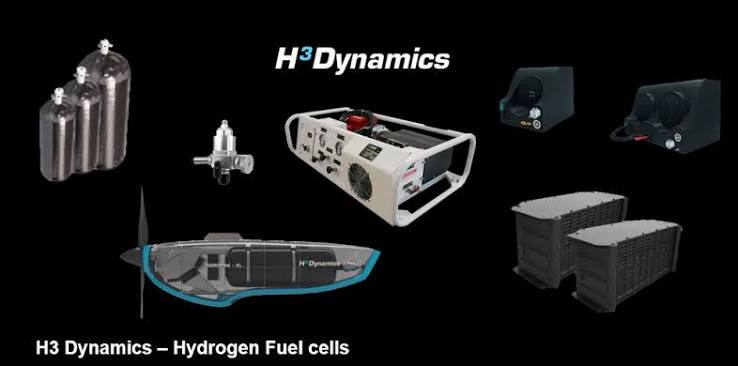
A typical UAV hydrogen power system may include a hydrogen storage tank, fuel cell, power-management electronics, cooling components, and the aircraft’s propulsion and control systems. Hydrogen stored in the tank is delivered to the fuel cell, where it reacts with oxygen to generate electricity. The electricity then powers the motors and onboard electronics.
The hydrogen storage system is a particularly important component because its design affects the aircraft’s weight, operating duration, safety, and overall efficiency.
Why Flight Range Matters for UAVs
Flight range and endurance are critical factors in UAV operations. A drone with limited flight time may need to return frequently for battery replacement or recharging. This can reduce productivity and increase operational costs.
For applications such as long-distance inspection, agricultural monitoring, infrastructure surveys, and remote-area observation, extended endurance can provide significant advantages. A UAV capable of remaining airborne for longer periods can collect more information during a single mission and reduce interruptions caused by energy limitations.
A Hydrogen Storage System for UAV can contribute to longer endurance by enabling the aircraft to carry a high amount of usable energy without relying entirely on conventional battery storage.
Higher Energy Density and Longer Endurance
One of the main benefits of hydrogen is its high specific energy by mass. Hydrogen contains significantly more energy per unit of mass than many conventional battery technologies when considered as a fuel.
For UAVs, weight is extremely important. Every additional kilogram affects propulsion requirements and flight performance. A well-designed hydrogen storage solution can therefore provide a useful balance between fuel capacity and aircraft weight.
Fuel cells can continuously generate electricity as long as hydrogen and oxygen are available. This means that, rather than depending solely on the stored charge of a battery, a hydrogen-powered UAV can potentially operate for much longer periods.
Some systems may also combine hydrogen fuel cells with batteries. In such hybrid configurations, the fuel cell can provide sustained power while the battery supports temporary high-power demands, such as takeoff or rapid changes in flight conditions.
Improving Energy Efficiency
A Hydrogen Storage System for UAV can also support improved energy efficiency through fuel-cell technology. Fuel cells convert the chemical energy of hydrogen into electrical energy through an electrochemical process rather than conventional combustion.
This process can operate efficiently under appropriate conditions and produces water and heat as primary byproducts when using hydrogen and oxygen. Because the electricity is generated onboard, the system can provide a continuous power source for the aircraft.
Efficient energy conversion can help UAV designers optimize fuel consumption and extend operational endurance. However, the overall efficiency depends on the complete system, including hydrogen production, compression or storage, fuel-cell performance, power electronics, motors, and aircraft aerodynamics.
The Role of Hydrogen Storage Tanks
Hydrogen storage tanks must be designed to safely contain hydrogen while keeping weight as low as practical. UAV applications typically require compact and lightweight storage solutions because payload capacity is limited.
Storage technology can involve compressed hydrogen and other approaches depending on the aircraft design and application. Compressed hydrogen systems require tanks capable of withstanding high pressures, while alternative storage technologies may have different requirements involving weight, volume, temperature, and system complexity.
For UAV manufacturers, selecting an appropriate storage method requires careful consideration of flight duration, available space, operating environment, payload, pressure requirements, and safety considerations.
Lightweight Design and UAV Performance
Weight optimization is one of the biggest challenges in UAV engineering. A heavier aircraft generally requires more energy to maintain flight, which can reduce endurance.
Hydrogen itself is extremely lightweight, but the complete storage system includes the tank and associated equipment. Therefore, the practical advantage of hydrogen depends on the combined mass and efficiency of the storage and power-generation system.
Modern materials and engineering techniques can help reduce the weight of storage components. Lightweight composite materials, optimized tank structures, and efficient system integration can contribute to better UAV performance.
A properly engineered hydrogen system can therefore help designers achieve a useful combination of endurance, payload capacity, and propulsion efficiency.
Hydrogen and Hybrid UAV Power Systems
Hydrogen does not necessarily have to replace batteries completely. Hybrid power systems can combine fuel cells and batteries to take advantage of both technologies.
The fuel cell can provide steady electrical power during cruising, while the battery can supply additional power when the UAV experiences temporary increases in demand. During suitable operating conditions, the fuel cell can also help maintain the battery’s charge.
This approach can improve power management and allow the aircraft to operate efficiently across different phases of a mission. It can be particularly useful for UAVs that need sustained flight combined with occasional high-power maneuvers.
Applications of Hydrogen-Powered UAVs
Long-endurance hydrogen UAVs have potential applications across multiple industries. In agriculture, extended flight times can help drones monitor large areas of farmland more efficiently. In infrastructure inspection, longer endurance can support the inspection of pipelines, bridges, power lines, and other large assets.
Environmental monitoring is another promising application. UAVs can survey forests, coastlines, wildlife habitats, and remote regions without requiring frequent landings.
Hydrogen-powered aircraft may also be useful for communications and logistics applications where extended airborne operation is valuable. Their potential for longer missions makes hydrogen an area of interest for future commercial and industrial UAV development.
Safety and System Design Considerations
Although hydrogen offers significant energy advantages, storage and handling require careful engineering. Hydrogen is highly flammable, so systems must incorporate appropriate containment, monitoring, ventilation, pressure management, and emergency procedures.
UAV manufacturers must also consider the effects of vibration, temperature changes, impacts, and other environmental conditions during operation. Sensors and control systems can help monitor storage pressure and system performance.
Safety should therefore be considered throughout the entire design process rather than treated as an additional feature. Proper testing, certification, maintenance, and operational procedures are essential for reliable hydrogen-powered UAV systems.
The Future of Hydrogen Storage Systems for UAVs
As UAV technology continues to develop, the need for longer endurance and efficient power sources is likely to increase. Improvements in fuel cells, storage materials, lightweight tanks, power electronics, and aircraft design could make hydrogen systems increasingly practical.
The future may also involve greater integration between hydrogen systems and advanced batteries, allowing UAVs to optimize energy use according to mission requirements. Improvements in hydrogen production and distribution infrastructure could further support wider adoption.
Conclusion
A Hydrogen Storage System for UAV can play an important role in improving flight range and energy efficiency. By storing hydrogen and supplying it to a fuel cell, UAVs can generate electricity continuously while potentially achieving longer endurance than conventional battery-only platforms.
The benefits extend beyond flight duration. Lightweight system design, efficient energy conversion, hybrid power configurations, and improved energy management can contribute to better overall UAV performance. At the same time, storage weight, tank design, safety, and system integration remain important engineering challenges.
As hydrogen technology advances, it has the potential to become an important power solution for long-endurance UAVs used in commercial, industrial, environmental, and specialized applications. With continued innovation, hydrogen storage could help create UAV platforms capable of flying farther, operating longer, and completing increasingly demanding missions efficiently.